July 30, 2026
Stratford’s Hidden Universe
#stratfordhiddenuniverse #stratfordshiddenuniverse #stratfordecology #stratfordctecology
Lessons from Cape Cod #2
Ashu-what?
The bus pulled into a residential area and then a road that could have been anywhere in New England. We had already driven around the Cape Cod Fairgrounds and had the opportunity to see the parking lot covered with solar panel stands where people would be parking in a few days. Yet the solar panels didn’t compete with what would be revealed in a few minutes.
Once off the bus and down the dirt road and then path, both of which looked like others I’ve traversed over the years, was an open meadow that at one time had been a working agricultural area that had been given over to Massachusetts Audubon. Just walking in felt like a peaceful, Brigadoon-type oasis. Different types of birds could be heard singing and other creatures and flora abounded. The vegetation was very colorful and had many varieties. Then, making a right turn, an even bigger surprise that felt like Indiana Jones finding the Holy Grail.
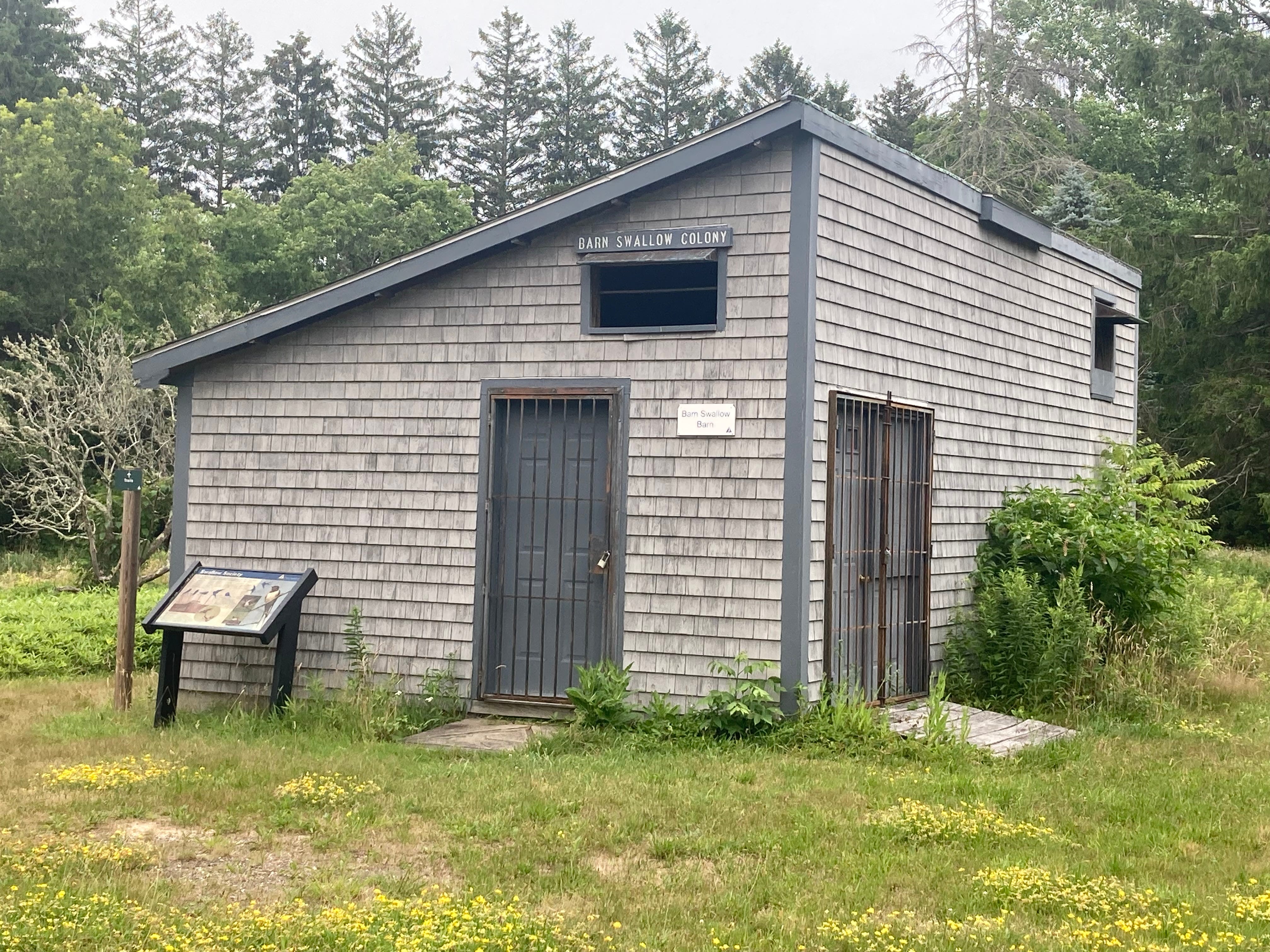
It took a moment yet my jaw dropped when I realized what the building, the structure was. In the first seconds the building looked like an ordinary structure, almost a large shed. I then realized I had never seen something like this.
A whole structure for barn swallows.
A whole structure for barn swallows.
A whole structure for barn swallows.
Here, at this place called Ashumet Holly. Words and a place I hadn’t even heard about until about 30 minutes before. This Plan B trip stop had turned into a life changing and eye opening experience.
Growing up and living in an urban/suburban environment, barn swallows are one of those birds wished for because of their high aid to humans yet are hard to come by on a daily basis. They are prolific insect eaters and help control insect populations.
The Merlin app says they should be in Stratford now and information about them says they will set up nests and roosts in urbanized places, yet they make their nests out of mud and need a cup-shaped nest. Therefore, they need water nearby and foliage.
They received the name “barn swallow” because they would nest in barns and then when barns were demolished, their survival went with the destroyed barns. They had to adapt and they do, yet they still remain difficult to see or find on a regular basis around our area.
Personally, I’ve always wanted and wished to figure out a small barn swallow setup or wished the effort would be made for several local “neighborhood” barn swallow setups in municipalities because they would benefit everyone. For all of the rabbitholes I’ve gone down, I’d never seen nor heard of this before. People had actually taken the time to create and invest in barn swallows. And it wasn’t only about Ashumeth Holly.
Those barn swallows will fly all over the area eating insects, helping homeowners and residents, including all of those people coming to the Fairgrounds. Even being at Ashument Holly the lack of insects buzzing and biting was noticeable.
Thank you, barn swallows and thank you to the humans that help them.
More information about barn swallows and their importance: https://njaes.rutgers.edu/FS1378/