Lessons Learned from Cape Cod
When going away brings lessons about home.......

July 23, 2026
Stratford’s Hidden Universe
#stratfordhiddenuniverse #stratfordshiddenuniverse #stratfordecology #stratfordctecology
Lessons from Cape Cod
Note: I went on an environmental focused tour of Cape Cod this past month and found the Cape struggles with a lot of the same environmental issues Stratford struggles with. There are a lot of unsung and unpaid heroes on the Cape who are rescuing stranded animals large and small while struggling to provide environmental education to a population that swells each summer and then dissipates in the fall. We don’t hear about them in the news.
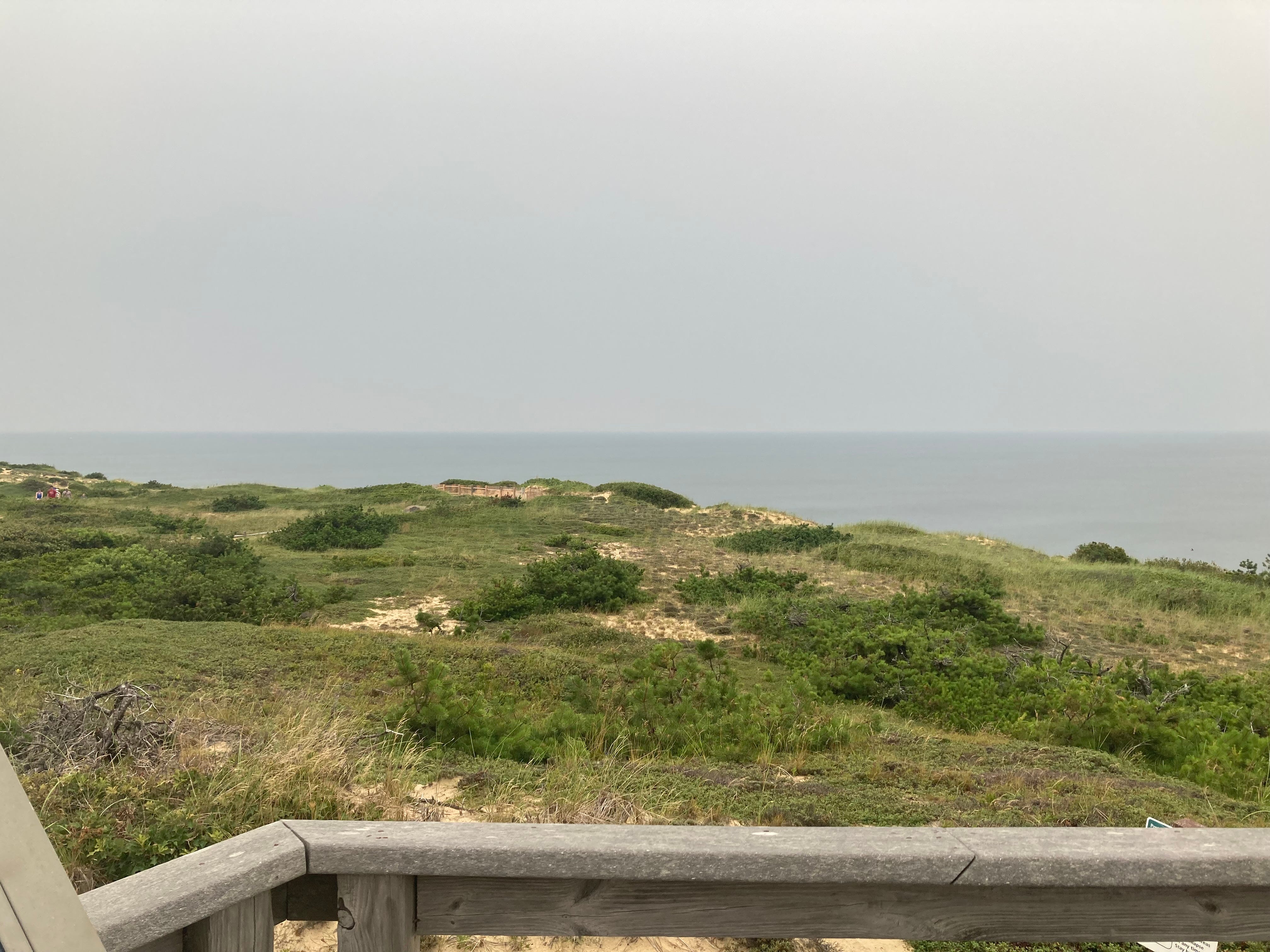
The view was similar: roped off areas with telltale footprints from both humans and dogs. The story was also the same: volunteers going out and roping off areas where piping plovers have established their nests year-after-year only to have humans and dogs out on the beaches minutes later. Then all sorts of methods used to try to secure and protect plovers’ nests only have to chase people off and worry about four-legged predators.
Another view and the same issue: coastal houses built on piles of rocks that will crumble and slide back into the water at some point. Whatever point that will be depends on water levels, storms, how well the rocks were constructed without cement, how many animals may burrow in them, and if anyone monitors the movement of the rocks and the houses’ structures on a regular basis. Constructing buildings on sand,fill, and rocks is never a good idea where one lives.
A part of American history not taught in school: the Europeans cut down all of the trees and thereby forests that had been there for thousands of years on the Cape. This caused the top soil to erode and left the sand underneath. Now about 400 years later, unless planned out, there are only scrub pines left. Also, the sand on the Cape shores is slowly collapsing into the water, bringing with it some historical buildings. Just like Stratford, the Europeans believed the Devil and other wicked spirits lived in the woods. Additionally, the wood was needed for housing and ships. Also, similar to the Thanksgiving story passed to us, the Europeans would not listen to the Native Peoples until they began to starve because of deforestation and the sand.
Efforts have been made in Provincetown since the 1980’s to plant grass cords to prevent wind and water erosion of the famous sand dunes. The area has been under national protection since the 1950’s when then Senator Kennedy, later President Kennedy, advocated and won the dunes being established as a national seashore. Similar efforts have been made here in Stratford yet not to the extent made on the Cape. It takes a while for the grasses to establish themselves and the effort was made by a team of volunteers who organized and did fundraising to buy the grass plugs, plant them, and continuously monitor them to this day.
Like Stratford, the osprey population has also rebounded on the Cape. They live on lights, yet wetlands are interwoven within residential areas. Efforts have been visibly made to place at least one to two osprey platforms per wetland. Driving down a residential road or kayaking, one can find themselves eye-to-eye with an osprey nest. They are close enough to see them and their babies.
The Cape’s wetlands are the same and hold the same creatures as Stratford’s, including the endangered grasses. There were thousands of fiddler crabs, lots of unique migrating birds, and brackish water tides that rise and fall at similar levels to Stratford’s. While some have been placed in Federal care, like Salt Pond that is run by the National Park Service and is part of the Cape Cod National Seashore, many are still inland and efforts are being made to preserve them as open space either through Audubon or giving them to municipalities. Yet like Stratford, the same issues are still presenting themselves on a daily basis and the fight and advocacy never ends.
One aspect our guide continuously emphasized with us:
Remember: every straw may possibly end up in the water, here or the Cape, or wherever one goes.